Viktor Long · 4 October 2026
Data Ethics Protocols Shape Biotech Trial Growth Across European Research Networks
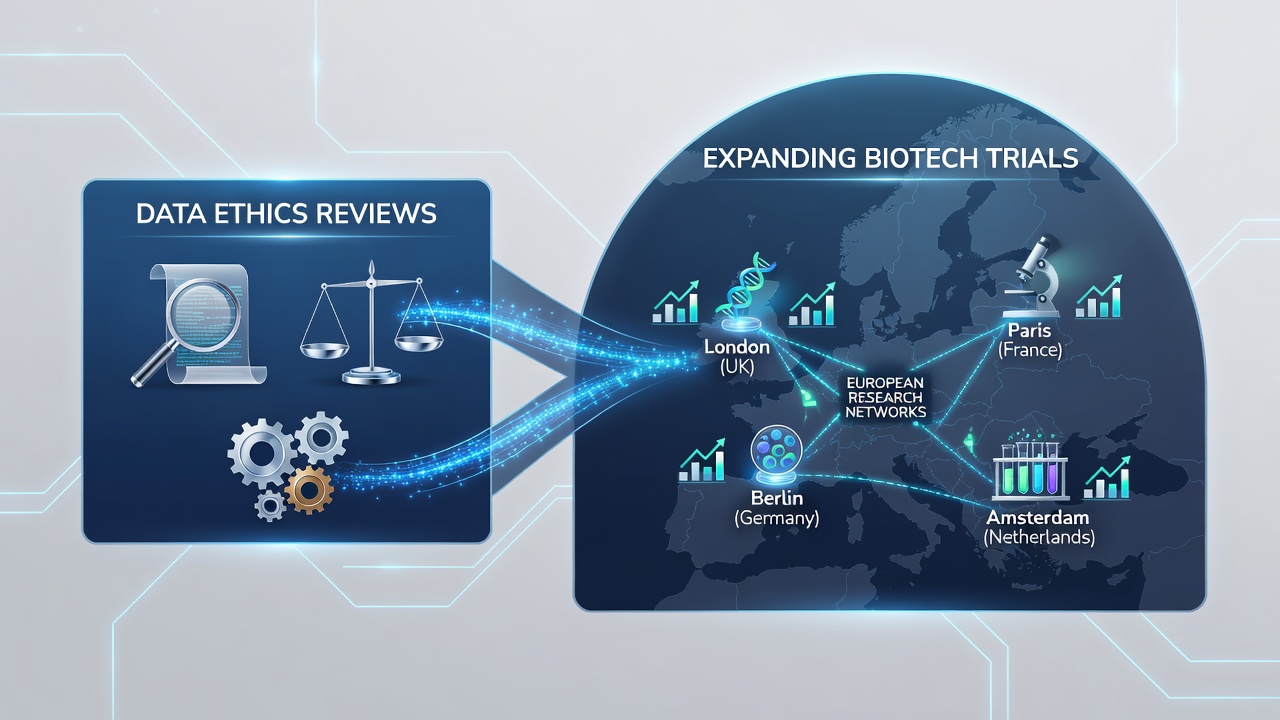
European research networks have expanded biotech clinical trials substantially over the past decade, and data ethics reviews now form a core part of the approval process for many of these projects. Regulatory frameworks such as the General Data Protection Regulation require detailed assessments of how patient data moves through multi-country studies, while ethics committees evaluate consent procedures and data sharing agreements before trials begin.
Networks funded through Horizon Europe coordinate efforts among universities, hospitals and biotech firms in more than twenty countries. These collaborations generate large datasets from genomic sequencing and wearable monitoring devices, and ethics reviews examine risks related to re-identification and secondary use of that information. Figures from the European Commission indicate that ethics approvals for biotech trials increased by 28 percent between 2023 and 2025, with data governance questions cited as a primary factor in extended review timelines.
Regulatory Requirements and Trial Design
Ethics boards operating under the Clinical Trials Regulation must verify that data minimization principles guide trial protocols. Researchers adjust study designs to limit collection of identifiable information, and they implement pseudonymization techniques before data leaves individual sites. This approach reduces delays once trials reach the recruitment stage, because participating centers already meet documented standards for data handling.
Observers note that countries with established national ethics review platforms, such as the Netherlands and Sweden, complete multi-site approvals faster than regions that rely on local committees alone. Centralized platforms allow simultaneous submission of data ethics documentation, and they maintain shared templates for data transfer agreements that satisfy requirements across member states.
Impact on Cross-Border Data Flows
Biotech trials frequently involve real-time transfer of genomic and imaging data between laboratories in different jurisdictions. Ethics reviews assess whether these transfers comply with adequacy decisions and standard contractual clauses, and they require contingency plans for jurisdictions that update their data protection rules during the study period. In October 2026 several networks updated their data processing agreements after the European Data Protection Board issued new guidance on health research data.
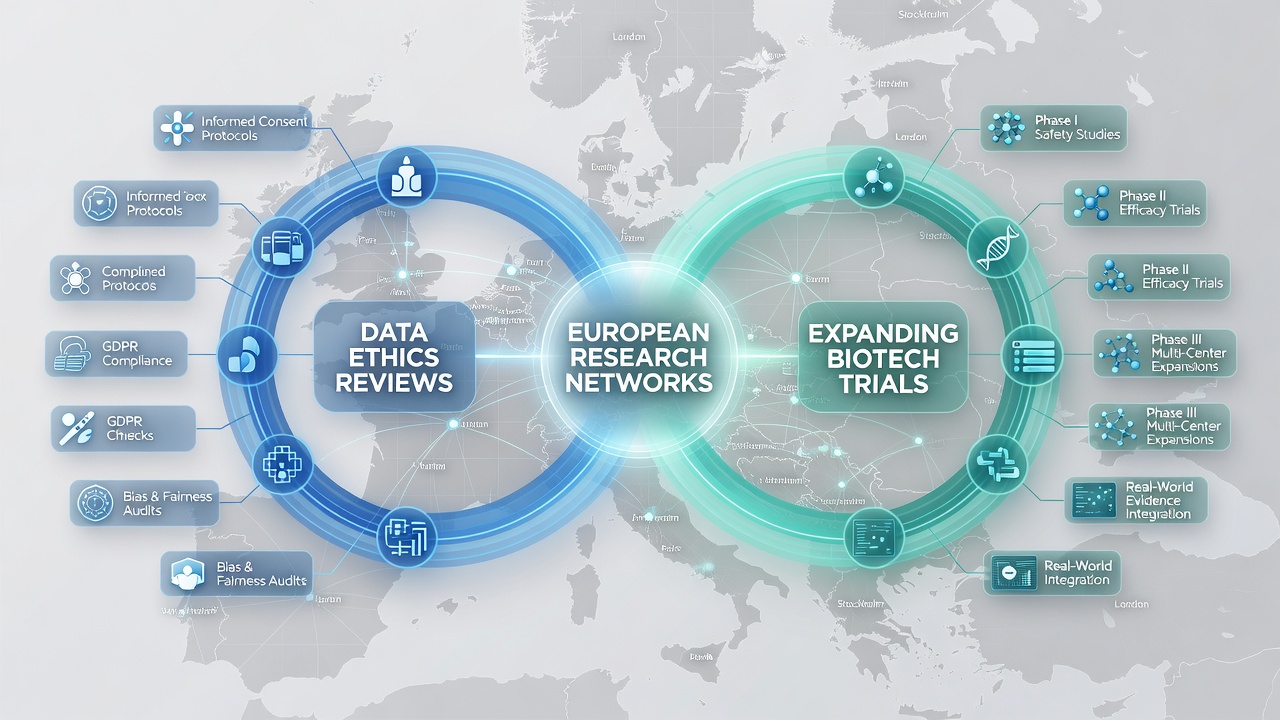
One study coordinated by a consortium including institutions in Germany, France and Italy showed that early integration of ethics review feedback shortened overall trial startup time by an average of eleven weeks. The same consortium reported higher retention rates among participants when consent forms clearly explained data retention periods and options for future contact. These outcomes emerged because ethics committees required plain-language explanations and accessible withdrawal mechanisms.
Tools and Infrastructure Developments
Research infrastructures such as the European Open Science Cloud now provide secure environments where trial data can be analyzed without leaving designated processing zones. Ethics reviews increasingly reference these controlled environments when evaluating risks of unauthorized access. Technical teams document access logs and audit trails, and review panels verify that these records meet retention requirements set by national data protection authorities.
Industry groups including the European Federation of Pharmaceutical Industries and Associations publish guidance documents that align trial protocols with both regulatory expectations and ethics committee practices. These documents cover topics such as federated learning approaches that keep raw data at originating sites while sharing only model outputs, a method that several ongoing oncology trials adopted after ethics feedback highlighted concerns about bulk data export.
Training and Capacity Building
European research networks have launched training modules that combine regulatory updates with practical case studies drawn from recent biotech trials. Participants learn to map data flows at the protocol design stage rather than after funding is secured, and they practice drafting responses to common ethics committee questions about data retention and participant re-contact. Institutions that completed these modules reported fewer resubmissions during the ethics approval phase.
Conclusion
Connections between data ethics reviews and expanding biotech trials continue to evolve as European research networks refine their procedures and technical infrastructure. Regulatory bodies publish updated guidance, consortia adopt shared platforms, and ethics committees incorporate lessons from completed studies into future evaluations. These developments shape how trials are designed, how data moves across borders, and how participant protections remain consistent across participating sites.