Elena Lehmann · 1 November 2026
Innovation Trails Linking AI Safety Accolades to Enhanced Space Sensor Prototypes in Collaborative Frameworks
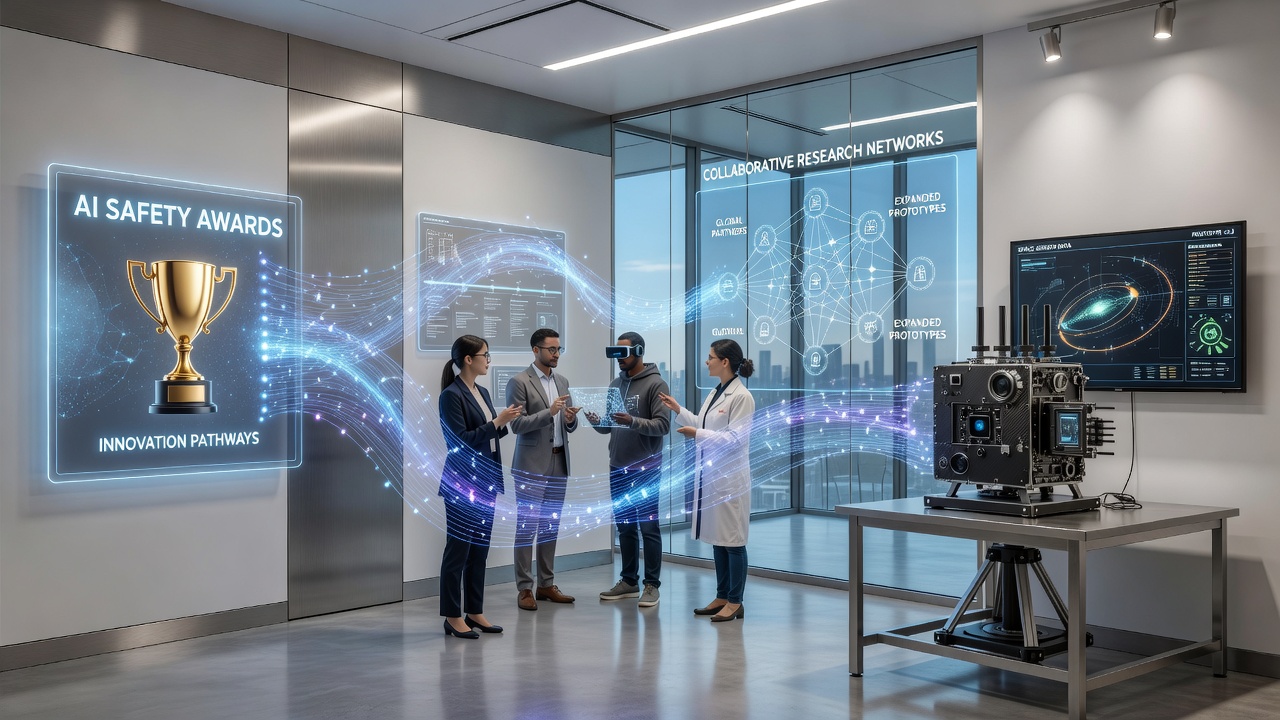
Research networks have traced clear pathways where AI safety awards lead directly into expanded space sensor prototype development, with collaborative efforts accelerating both fields since the mid-2020s. Data from multiple international programs shows that recognition for safe AI systems often supplies algorithms later adapted for sensor reliability in orbital environments, where errors carry high costs. Experts at institutions across North America, Europe, and Asia have documented these transfers through joint publications and shared testing facilities.
Foundations in AI Safety Recognition Programs
Awards programs focused on AI safety have grown steadily, with funding rounds in 2025 supporting projects that emphasize verifiable decision-making under uncertainty. Researchers note that these initiatives frequently produce models capable of handling noisy inputs, a feature that translates well to space applications involving radiation interference and variable lighting conditions. According to reports from the National Aeronautics and Space Administration, early partnerships with AI safety groups yielded sensor firmware updates that reduced false positives in debris detection by measurable margins.
One case involved teams that received safety commendations for reinforcement learning protocols, then applied similar verification techniques to satellite payload controls. This shift occurred without major redesigns because the core constraints around predictability remained consistent across domains. Observers point out that such overlaps emerged naturally once networks began hosting cross-disciplinary workshops rather than isolated conferences.
Expansion of Sensor Prototypes Through Shared Networks
Collaborative research networks expanded their scope in late 2025, incorporating sensor hardware teams alongside software specialists. Prototypes developed under these arrangements now feature modular designs that accept updated AI components as safety standards evolve. Figures released by the European Space Agency indicate that joint testing cycles shortened from eighteen months to under twelve in several documented instances, largely due to shared validation datasets originating from AI safety benchmarks.

November 2026 marked a notable milestone when multiple networks presented integrated prototypes at a coordinated review session, demonstrating how award-winning AI verification methods had been embedded into radiation-hardened sensor arrays. These arrays underwent calibration trials that confirmed stable performance across temperature extremes encountered in low-Earth orbit. Teams from Canada and Australia contributed environmental simulation data that complemented European and American hardware contributions, illustrating geographic distribution of expertise.
Mechanisms Driving Cross-Domain Transfers
Knowledge transfer occurs primarily through standardized interfaces and open testing protocols rather than proprietary handoffs. Research indicates that once an AI safety award highlights a particular verification technique, network participants quickly prototype adaptations for sensor fusion tasks. This process relies on common simulation environments that model both terrestrial decision scenarios and orbital dynamics, allowing direct comparison of failure modes.
Those who have studied these networks observe that grant conditions increasingly require evidence of downstream applicability, which has encouraged explicit documentation of how safety metrics map onto sensor reliability targets. Data ethics reviews conducted in parallel have further shaped prototype iterations, ensuring that sensor outputs meet transparency requirements established in earlier AI safety frameworks.
Current Scale and Geographic Spread
By mid-2026 the number of active collaborative nodes had increased across three continents, with sensor prototype counts rising in tandem. Institutions in the United Kingdom, Germany, Japan, and the United States maintain active links that route AI safety outputs toward hardware validation sites. Reports compiled by the Australian Space Agency highlight parallel contributions in thermal management algorithms originally refined under safety award criteria.
These connections operate through scheduled data exchanges and joint calibration campaigns rather than centralized command structures. The resulting prototypes exhibit consistent performance improvements in metrics such as detection range and power efficiency, tracked through shared dashboards accessible to network members.
Conclusion
Pathways from AI safety awards to space sensor prototype expansions rest on documented overlaps in verification needs and shared infrastructure within research networks. Evidence gathered through 2026 shows steady growth in prototype deployments that incorporate techniques first recognized in safety programs. Continued monitoring of these transfers will depend on sustained international coordination and open reporting of performance data across participating regions.